
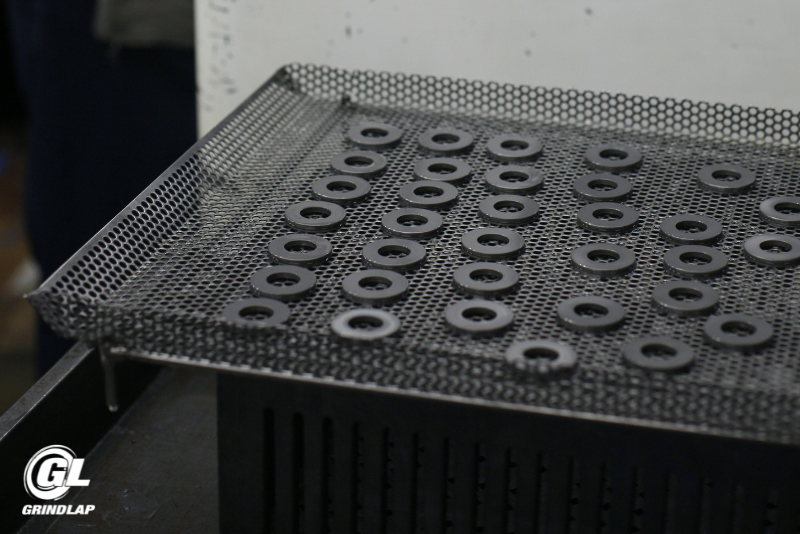
Precision grinding is often viewed as one of the final steps in manufacturing.
But achieving exceptional results depends on decisions made much earlier.
When engineers take the time to properly prepare parts for precision grinding, they reduce production delays, improve part quality, and make the entire manufacturing process more efficient.
After more than 30 years of helping manufacturers solve complex grinding challenges, Grind Lap Executive Vice President Brian Gallichio has found that successful projects have one thing in common: they begin with good preparation.
Here are seven things every engineer should consider before sending parts for precision grinding.
1. Know the Incoming Condition of the Part
One of the first questions Brian asks isn’t about the finished dimensions.
It’s about where the part is starting.
Questions like:
- What are the current dimensions?
- How much stock has been left for grinding?
- Is the part flat?
- Is it straight?
- Is it round?
Without understanding the incoming condition, it’s difficult to determine the best grinding approach.
As Brian explains, customers often provide the finished print but not the information needed to understand how the part reached its current state.
2. Don’t Underestimate Heat Treat Distortion
Heat treatment changes more than hardness.
It can also change the shape of the part.
Long, slender components often bend during heat treatment, while other parts may warp or move enough to affect grinding.
Understanding what happens after heat treatment helps determine how much material should be left for grinding and whether the desired tolerances can realistically be achieved.
3. Identify Your Most Critical Requirements
Not every specification carries the same importance.
Some applications prioritize:
- Flatness
- Parallelism
- Surface finish
- Size
- Concentricity
In some situations, improving one characteristic may make another more difficult to achieve.
Brian believes those priorities should be discussed early so the grinding process can be planned around what matters most to the customer.
4. Material Matters More Than You Think
Different materials behave differently during grinding.
Even when two parts share similar dimensions, material composition can affect:
- Wheel selection
- Grinding parameters
- Heat generation
- Surface finish
- Overall process strategy
When working with specialty alloys or unfamiliar materials, providing additional information allows the grinding team to recommend the most effective approach.
5. Share How the Part Was Manufactured
Precision grinding is only one step in the manufacturing process.
Brian wants to understand what happened beforehand.
Was the part:
- Turned?
- Milled?
- Saw cut?
- Heat treated?
- Flame cut?
Knowing how the component was produced helps determine the best way to achieve the finished specifications.
“I want to know how they’re making the part before it gets to me,” Brian explains, “and then I can explain how we’ll get it from that point to the finished product.”
6. Involve Your Grinding Partner Early
For new or complex parts, waiting until production is complete may limit your options.
Early conversations can uncover opportunities to:
- Improve manufacturability
- Reduce machining time
- Leave the proper stock allowance
- Avoid unnecessary operations
- Improve finished part quality
Sometimes a short conversation before production begins saves hours of rework later.
7. Choose a Partner Who Asks Questions
The best grinding companies don’t simply review a blueprint.
Ask questions.
They want to understand your manufacturing process.
Discuss tradeoffs.
They identify potential issues before production begins.
Brian believes those conversations lead to better manufacturing decisions and stronger long-term partnerships.
“A lot can be taught in a phone conversation that just doesn’t seem to be caught in an email.”
Good Preparation Leads to Better Precision Grinding
Preparing parts for precision grinding isn’t simply about finishing machining operations.
It’s about giving your grinding partner the information needed to recommend the best manufacturing approach.
Understanding incoming conditions, material properties, heat treatment, and critical tolerances helps improve communication, reduce unnecessary delays, and achieve more consistent results.
That’s why Brian believes successful grinding starts long before the part reaches the machine.
It starts with preparation.
Check out our other blogs.
Contact us for your finishing needs.