
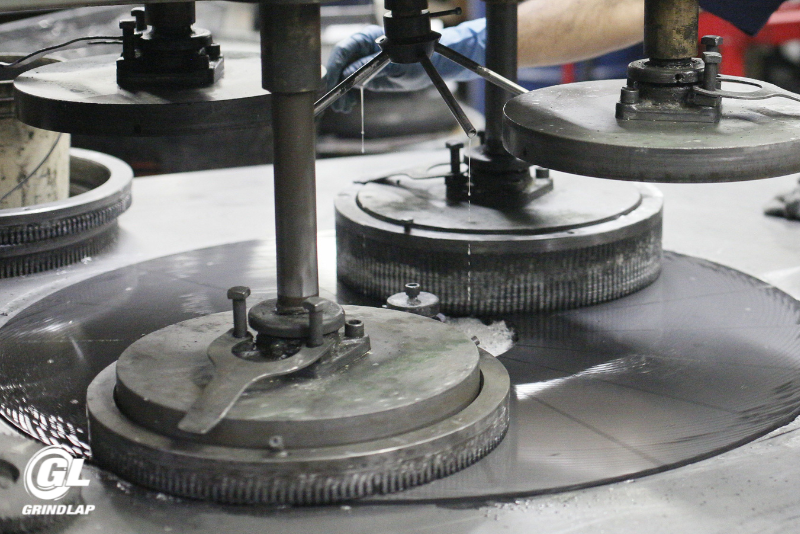
Most people think precision grinding begins when a part reaches the grinding machine.
In reality, the manufacturing process for precision grinding starts much earlier.
Every operation, from machining and heat treating to material selection and stock allowance, affects the final outcome. Understanding those steps before grinding begins helps manufacturers improve quality, reduce costs, and avoid unnecessary production challenges.
After more than 30 years of helping customers solve complex manufacturing challenges, Grind Lap Executive Vice President Brian Gallichio has learned that the best precision grinding results come from understanding the entire manufacturing process, not just the final drawing.
“The best way to approach a project,” Brian explains, “is to understand how the customer is making the part before it gets to us. Then we can determine the best path from that point to the finished product.”
Understanding the Manufacturing Process for Precision Grinding
A blueprint provides dimensions, tolerances, and specifications, but it doesn’t always tell the whole story.
To determine the best grinding approach, Brian begins by asking questions that often aren’t answered on the drawing.
For example:
- What size is the part before grinding?
- Has it been heat treated?
- How much stock has been left for grinding?
- How flat or straight is the part today?
- What surface finish is required?
- Which tolerances are truly critical?
Those answers influence everything from process selection to machine setup and production time.
Without understanding the incoming condition of the part, even the most experienced grinding professionals are forced to make assumptions.
That’s why the manufacturing process for precision grinding begins with gathering information, not simply reviewing a print.
Why Every Manufacturing Step Matters
Precision grinding is rarely the first manufacturing operation.
By the time a component arrives at Grind Lap, it has often been cut, machined, turned, milled, drilled, or heat treated. Every one of those processes affects what happens next.
For example, a long, slender shaft may distort during heat treatment. A flame-cut plate may require additional stock removal before it can achieve the required flatness. A specialty alloy may require an entirely different grinding strategy than standard carbon steel.
Brian knows that each manufacturing step builds on the one before it.
Understanding that complete history allows Grind Lap to recommend the most effective approach while helping customers avoid unnecessary delays or unexpected production issues.
Collaboration Improves the Manufacturing Process for Precision Grinding
One of Brian’s favorite parts of the job is working directly with customers to understand how their parts are manufactured.
Rather than simply receiving a blueprint and generating a quote, he prefers having a conversation.
“I like going back and forth with customers,” Brian says. “I want to know how they’re making the part before it gets to me, and then I can explain how we’ll get it from that point to the finished product.”
These discussions often uncover valuable information that isn’t immediately obvious.
Perhaps one tolerance is more important than another.
Maybe additional stock can be left during machining to improve grinding results.
Sometimes the customer’s preferred process isn’t the most efficient option.
Working together early allows both teams to identify opportunities that improve manufacturability while reducing unnecessary costs.
That’s why Brian believes collaboration is one of the most important parts of the manufacturing process for precision grinding.
One Manufacturing Process Doesn’t Fit Every Part
No two parts are exactly alike.
Even components that appear similar on paper may require completely different grinding strategies based on their material, geometry, tolerances, or previous manufacturing operations.
One of Grind Lap’s greatest advantages is the ability to perform multiple precision grinding processes under one roof.
Many grinding companies specialize in either flat parts or round parts.
Grind Lap offers expertise in both.
Whether a project requires:
- Blanchard Grinding
- Surface Grinding
- Double Disc Grinding
- Centerless Grinding
- Honing
- Precision Lapping
Brian and the engineering team evaluate the entire manufacturing process for precision grinding before recommending the best solution for the application.
That flexibility helps customers achieve better quality while simplifying their manufacturing supply chain.
Better Manufacturing Starts Before Grinding Begins
The best precision grinding results don’t begin when the grinding wheel touches the part.
They begin much earlier.
By understanding how a component is manufactured before it reaches the grinder, engineers can make better decisions about material, stock allowance, heat treatment, tolerances, and process selection.
That’s why Brian believes the manufacturing process for precision grinding should always include open communication between the customer and their grinding partner.
The earlier those conversations happen, the easier it becomes to identify potential challenges, improve manufacturability, and deliver consistent, high-quality results.
Because in precision manufacturing, asking the right questions before production begins often makes all the difference.
Check out our other blogs.
Contact us for your finishing needs.